Initiation for Release and Renewal
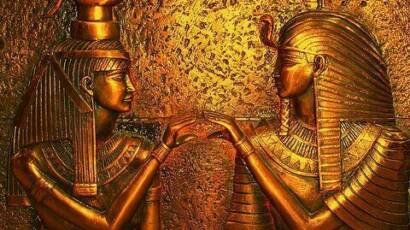
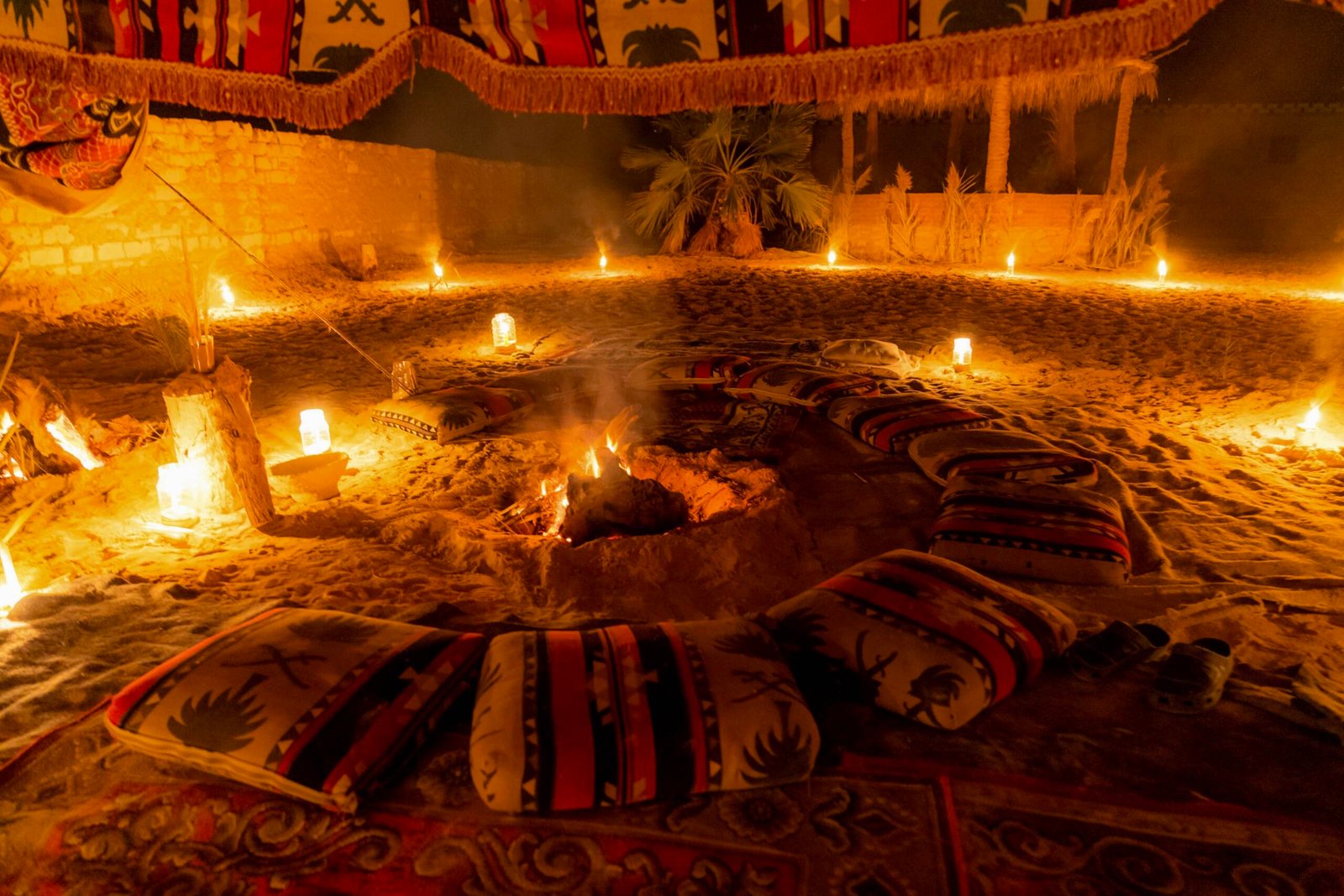
Some of us arrive in Egypt carrying something heavy: an old hurt, a loss, a relationship that ended without closure, or a chapter of life that never quite settled. This initiation is a safe, unhurried space to meet what you’re carrying, and to begin putting it down.
It starts with a conversation. Before anything else, your facilitator listens to what you’d like to work with and what you feel ready for, and together you set an intention. From there, the initiation unfolds through sound, grounding practices, breath and intuitive guidance. Sound helps the body soften and lets emotion move without forcing it. Grounding keeps you connected to the present, so that what surfaces can be met rather than relived. Throughout, you set the pace.
Many guests describe this initiation as a turning point: the moment they stopped carrying the past and started choosing what comes next. It’s a spiritual process, not a clinical one, and it’s not a replacement for professional support where that’s needed. What it offers is a sacred space to honor what happened, release what you no longer need, and step into a new chapter with more strength than you came in with.
Aromatherapy and Sound Healing

The ancient Egyptians prized aromatic oils and resins so highly that Queen Hatshepsut sent an expedition to the land of Punt to bring back living incense trees, a journey still carved on the walls of her temple at Deir el-Bahari. Scent was part of worship, healing and daily life, a way of preparing the body and spirit for the sacred.
This session brings that heritage together with live sound. Essential oils are chosen for the session and diffused or gently applied as you settle in. Then crystal bowls, gongs and tuning forks begin to fill the room with layered tones. With scent anchoring you in the body and sound giving the mind something to rest on, thinking slowly gives way to breath and vibration.
It’s a soft, sensory experience and a lovely first step for anyone new to sound work. It can be held on its own, or woven into a longer retreat as a gentle day between deeper ceremonies.
Retreat Aftercare
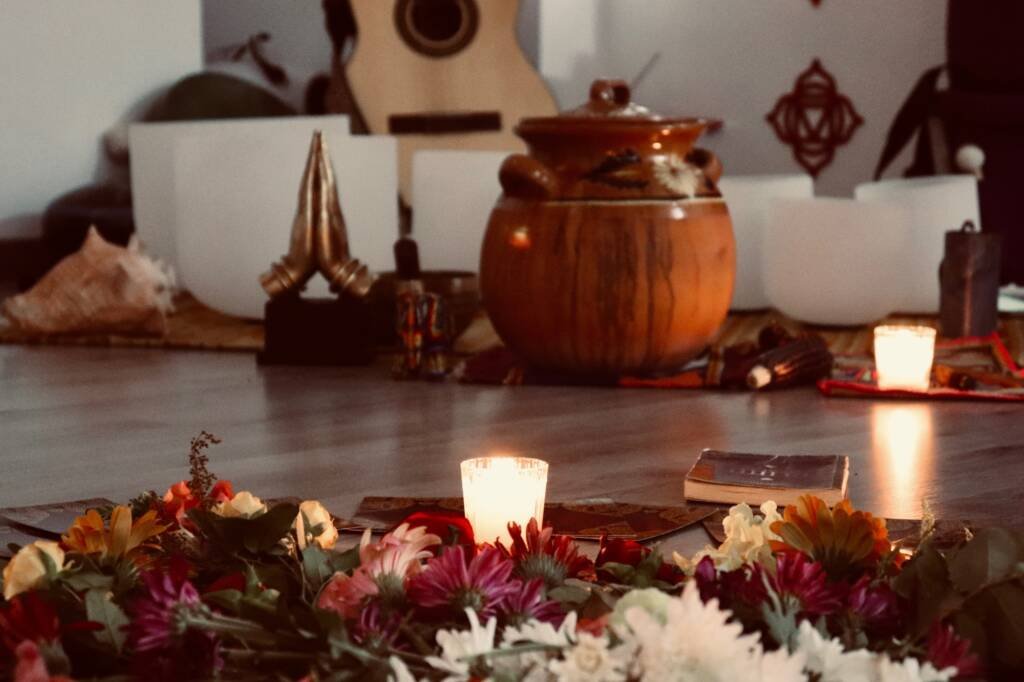
What happens on retreat doesn’t end at the airport. In the days and weeks after you return, the experience keeps unfolding. Insights surface unexpectedly. Emotions rise in waves. Old routines start pulling at the new ways of being you discovered in Egypt. This is completely natural, and it’s exactly when support matters most.
Aftercare gives that process a structure. Your facilitator stays in touch through follow-up calls, giving you space for processing what came up and making sense of what’s changing. Together, you look at how to integrate and assimilate the experience into your work, your relationships and your daily rhythm, and adjust your practices as life tests them.
Aftercare is included with every retreat, because we believe a ceremony is only as meaningful as what you’re able to carry from it into your life.
Chakra Tuning
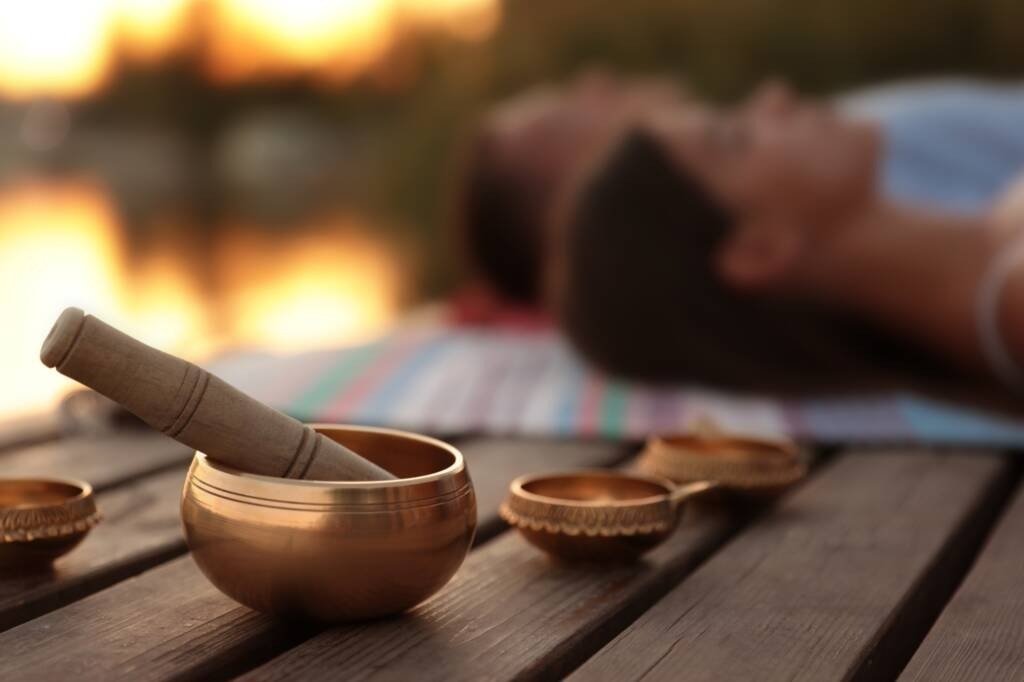
Bringing each energy center back into flow
In many spiritual traditions, the body holds seven main energy centers, or chakras, running from the base of the spine to the crown of the head. Each one is linked to a different part of our experience: the root to safety and belonging, the sacral center to creativity and emotion, the solar plexus to will and confidence, the heart to love and connection, the throat to expression, the third eye to intuition, and the crown to our sense of the sacred.
When life feels stuck in one area, the corresponding center often feels blocked or overactive. Chakra Tuning works through each one in turn, using guided meditation, sound frequencies and visualization. As you move from root to crown, energy is invited to move where it’s been held, and each center receives a new frequency to settle into.
Guests often leave feeling clearer, steadier and more at home in their bodies. No previous experience with chakra work is needed. If you already have a practice, sessions can go deeper into the centers you want to work with.
Sound Healing Sessions

Separate from our ceremonial sound journeys, these sessions are focused and personal, shaped around what you want to work with. Before you begin, we talk briefly about your intention. Then you lie back and let the sound take over.
We work with singing bowls, gongs, drums, tuning forks, voice and rare instruments seldom heard outside ceremony. Each one carries different tones and frequencies, and together they create a field of sound in which the body can let go of what it’s been holding. Some people feel waves of emotion, others drift somewhere between waking and dreaming, and many simply experience the deepest rest they’ve had in years.
Many guests describe finding a natural heart resonance by the end, a quiet coherence between mind and body that’s hard to put into words. Sessions can be held privately or for small groups, and are easy to add to any retreat.
Seeking Knowledge
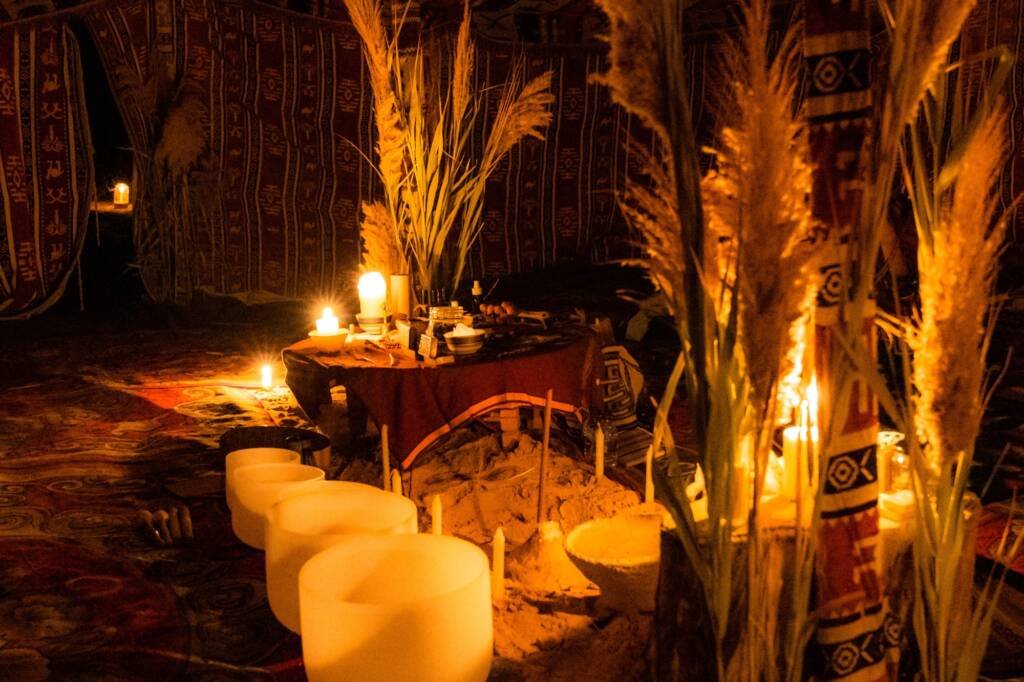
Seeking spiritual knowledge can change the course of a life. It invites you to explore the depths of your inner world and connect with something greater than yourself. Spiritual knowledge isn’t something you collect, though; it’s something you live your way into. On retreat, it tends to unfold in four steps, each building on the one before.
1. Know what you’re seeking. Every search starts with a question. Before you look outward, we help you name what you’re really looking for: meaning, direction, healing, or a deeper sense of connection. Being honest about the question shapes everything you’ll find.
2. Explore widely. Egypt is a living library. Temple walls, ancient texts, the stories behind each god and symbol, and the experiences of the people around you all become teachers. Our facilitators share the teachings behind every practice, from the myths of Thoth and Isis to the meaning of the symbols carved into stone, and leave plenty of room for your questions.
3. Discern what’s true for you. Not every teaching will fit, and that’s how it should be. We encourage you to question, compare and test what you learn against your own experience. Discernment separates what genuinely resonates from what simply sounds impressive, so what you keep is truly yours.
4. Live it. Knowledge only matters once it shapes how you act. The final step is bringing what you’ve learned into your choices, your words and your relationships. This is where commitment matters most, because everyday life will test every insight you bring home.
The Egyptians called the god of wisdom Thoth and credited him with the gift of writing itself, because knowledge was meant to be recorded, shared and lived, not kept. That’s the spirit we bring to every retreat: learning that stays with you, and changes how you move through the world.
Self-Reflection
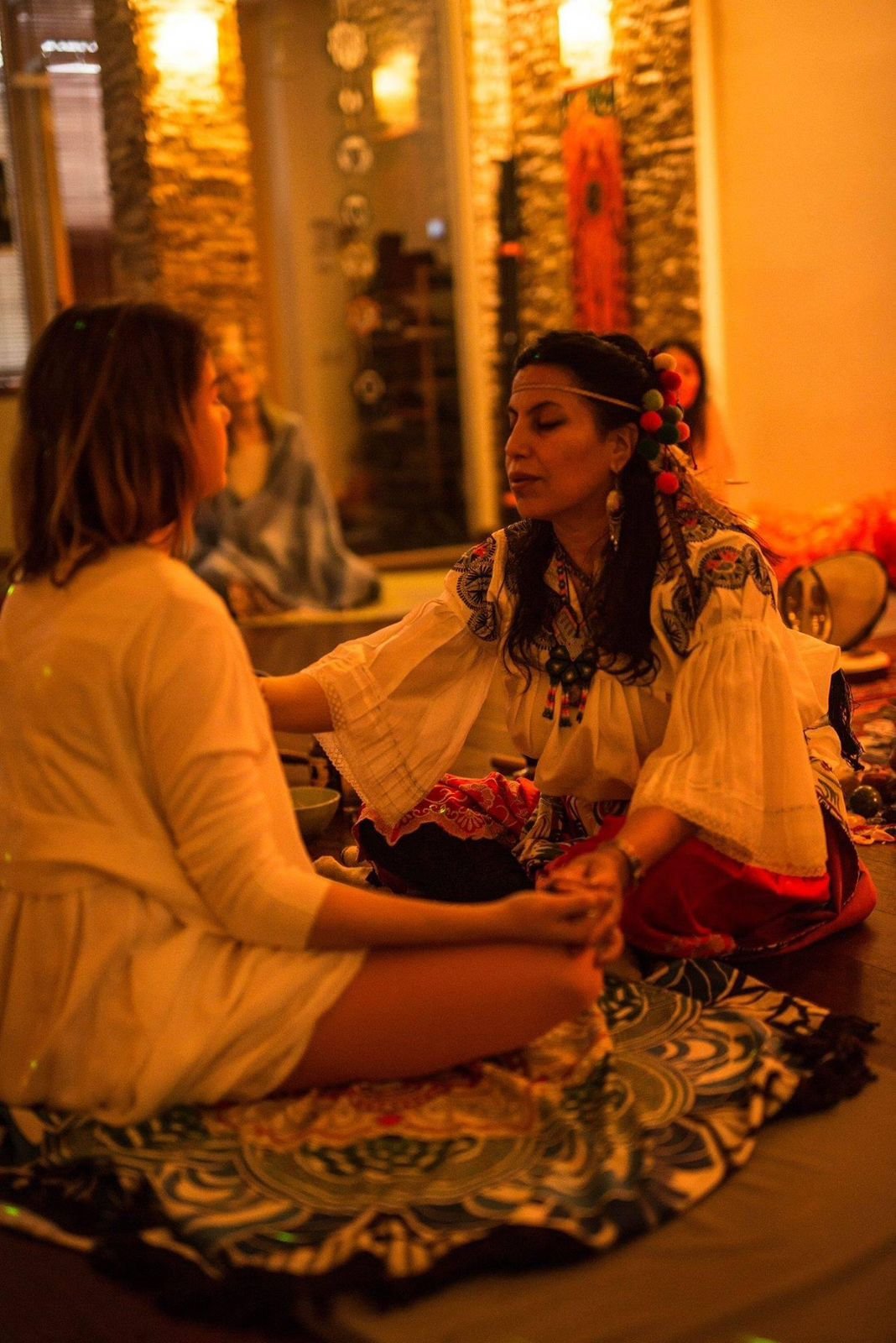
Self-reflection is how experience turns into insight. Without it, even the most powerful ceremony can pass like a beautiful dream. With it, you begin to understand your strengths, the habits that hold you back, and where you’re ready to grow. Between ceremonies and temple visits, we set aside real time for reflection, guided by four steps.
1. Notice. It starts with paying attention to your thoughts, your emotions, your reactions, and the moments that stir something in you. Most of us live on autopilot. Here, away from routine, you slow down enough to see what’s actually happening inside you, without rushing to explain it.
2. Ask. Then come the questions. Why did that moment move me? What am I avoiding? What keeps repeating in my life, in different forms? Journaling and guided prompts help you go beneath the first, easy answer to the one that’s really true.
3. Be honest. Next, you look at how your habits, choices and relationships line up with what you truly value. This isn’t about judging yourself; it’s about seeing clearly, and taking ownership of the parts of your life you have the power to change.
4. Choose one change. Finally, you turn insight into intention: one clear, realistic shift to carry forward. It might be a boundary, a habit, a conversation you’ve been putting off. Small changes, honestly chosen, are the ones that last.
Reflection is a skill, and like any skill, it grows with practice. Many guests tell us that the reflection habits they built on retreat became one of the most valuable things they brought home, a way of checking in with themselves long after the journey ended.
Integration and Practice

Living what you’ve learned
Spirituality is deeply personal. Whatever your background or beliefs, a retreat can open a lot in a short time: new understanding, released emotion, a different sense of who you are. Integration is how that opening settles into your life rather than fading once you’re home. We guide it in four stages.
1. Pause and process. After each ceremony, there’s time to rest, talk and write. Rushing from one powerful experience to the next can leave insights half-formed, so we build in space for processing, letting you absorb what came up before moving on.
2. Build a practice. Together, we choose a few simple daily practices that suit you: a short meditation, a breathing exercise, a few minutes of movement or prayer. The aim isn’t a perfect routine; it’s a practice you’ll actually keep, one that keeps the insight alive.
3. Anchor what shifted. Small rituals help you anchor and ground what has changed: a morning intention, a simple altar at home, a weekly moment of reflection. They become physical reminders of who you were in Egypt, and of who you’re choosing to be.
4. Live with intention. The last stage is the longest: making choices, day by day, that reflect what you discovered. It shows up in how you treat yourself and others, in what you say yes and no to, and in the quiet consistency of showing up for your practice.
Integration is where a retreat stops being a memory and becomes part of your life. It’s also why we never treat a ceremony as a one-off experience: what happens before and after matters just as much as the ceremony itself.
Inner Work
The quiet work beneath the surface
Inner work is a journey toward the parts of ourselves we usually avoid. It builds a deeper connection with your inner self and brings mind, body and spirit back into alignment. It’s rarely easy, and it asks for courage and honesty, but it’s often where the deepest change begins. It moves through four stages.
1. Awareness. First, you meet what’s there: old fears, recurring patterns, desires you’ve ignored, and the hurts you’ve learned to work around. Ceremony, meditation and honest conversation bring them gently into view. Seeing them clearly is the first act of freedom.
2. Acceptance. Next, you stop fighting what you find. Every part of you, including the parts you’d rather hide, has a reason for being there. Acceptance softens the inner struggle, quiets self-judgment, and makes room for kindness toward yourself, which is where real change becomes possible.
3. Forgiveness. Then comes letting go: of resentment toward others, and of the guilt and harsh judgment we turn on ourselves for past choices. Forgiveness doesn’t erase what happened or excuse it. It frees you from carrying it, so the past stops deciding your future.
4. Transformation. Finally, something new has room to grow. Patterns loosen, choices change, and you begin living more from who you are than from what happened to you. This is where many guests feel a sense of returning: to their purpose, their creativity, and themselves.
Inner work doesn’t happen all at once, and it doesn’t end when the retreat does. What a retreat offers is a protected space to begin it with support, and the tools to keep going with care once you’re home.
Spirit Tuning Retreats: A Day on Retreat
Stillness and exploration in balance
Everyday life can be overwhelming: busy minds, tired bodies, and very little time to listen inward. A Spirit Tuning retreat is a chance to recharge and realign mind, body and soul, immersed in Egypt’s landscapes while you go deep into your inner world. Our team guides you toward recognizing your true potential and resetting, so you return home with a renewed sense of purpose.
What can you expect?
A Spirit Tuning retreat is a balance of peace and adventure. Days begin early, often with meditation or breathwork as the sun rises. Mornings are for exploring: a temple visit, a walk through the desert, or time beside the Nile. Afternoons slow right down, with long, quiet hours to rest, read, journal or simply be. As evening falls, the group gathers for sound, ceremony or a sharing circle, and the day closes with dinner together under open skies.
Self-discovery and exploration feed each other. Time in nature opens you to the inner work, and the inner work changes how you see the world around you. There’s always space to rest, and if a day asks for more stillness or more exploration, the rhythm adjusts.
Join us for the journey of a lifetime.
Spirit Tuning Retreats: What We Offer
Ancient practice, modern care
Each Spirit Tuning retreat is shaped around your intention, drawing on ancient practices that work together across the days you’re with us.
The practices
Yoga and breathwork open the body and steady the breath. Sound journeys and meditation quiet the mind. Sacred plant medicine and shamanic ceremonies take the work deeper, for those who feel ready, after a private conversation about health and any medications. Together, they help you rediscover your calling and reignite your enthusiasm for life. Every practice is guided by experienced facilitators and matched to where you are.
Where you stay
Our eco-lodges are one of a kind: comfortable and beautifully made, with a deep respect for the land they sit on. Meals, transport and every session are arranged for you, so your only task is to be present. When you stay with us, you’re not just a guest; you’re part of our family, and we do everything we can to make sure you leave renewed and refreshed.
Stay connected
Ask us about our next Spirit Tuning retreat, and join our Collective group for updates, teachings and early access to new dates.